AI Agents Explained: What They Are, What They Are Not
Tool use, planning loops, memory, and MCP — the honest primer on AI agents in 2026, with concrete examples of what works today and what is still science fiction.

“AI agent” is the most overused word in the industry, which is unfortunate, because the thing it describes is genuinely important. Strip away the marketing and an agent is just a language model doing three things in a loop: decide, use a tool, observe the result. That loop, run well, is the difference between a chatbot that describes your calendar and software that fixes it.
The loop, precisely
A chatbot answers in one pass. An agent iterates:
- Plan — break the goal into steps (“find the invoice, check the amount, schedule payment”)
- Act — call a tool: search, read a file, query a database, click a button
- Observe — read the tool’s output and update the plan
- Repeat until done, stuck, or out of budget
That is the entire trick. No magic, no consciousness — a while-loop with a very good decision-maker inside it.
What tools actually look like
When an agent “uses a tool,” it is really emitting structured JSON that your software executes. A minimal example:
{
  "tool": "calendar.create_event",
  "arguments": {
    "title": "Design review",
    "date": "2026-04-14",
    "attendees": ["maya@studio.dev"],
    "conflict_policy": "suggest_alternative"
  }
}
Your code validates and runs it; the agent reads the result and moves on. The safety story is all in that validation layer — which is why serious agent deployments spend more time on permissions and access control than on prompts.
MCP: the USB-C of agents
The Model Context Protocol (official MCP specification) solved the integration mess. Before MCP, every agent needed custom connectors for every tool. Now a growing ecosystem of MCP servers exposes calendars, databases, code repositories, and SaaS apps in a standard shape, and any MCP-compatible agent can use them. If you evaluate agent platforms in 2026, “does it speak MCP?” is the first question. Learn more about MCP adoption and the growing list of integrations.
What works today
- Coding agents — multi-file refactors with tests as the safety net; the most mature category. See also Cursor and Devin.
- Research agents — search, read, cite; excellent at breadth, still needs human judgment on importance. Also explore NotebookLM and OpenAI Deep Research.
- Ops agents — triage alerts, open tickets, draft the postmortem; the boring wins are the real ones. Check out Kore.ai and Zendesk AI.
- Personal agents — inbox triage and scheduling, with approval required for anything outbound. Try Reclaim.ai or Claude’s computer use beta.
What is still fiction
- Agents that reliably complete open-ended goals lasting days without derailing (research on agent lifespan)
- Multi-agent “companies” that outperform one agent with better tools (see debate)
- Anything where the cost of a wrong action is high and the verification is hard. Read about frontier safety challenges.
The honest one-line test: an agent is worth deploying when a human would happily do the task, checks it quickly, and the cost of a mistake is small. See Simon Willison’s guide for more on this evaluation.
Start smaller than you think
The teams shipping agents successfully start with a single tool and a single workflow — “when a support ticket arrives, draft a reply for review” — and expand the blast radius only after the error rate is boring. Check out LangChain’s production checklist and CrewAI’s workflows. The loop is simple. The discipline is the product.
Further reading
Related articles
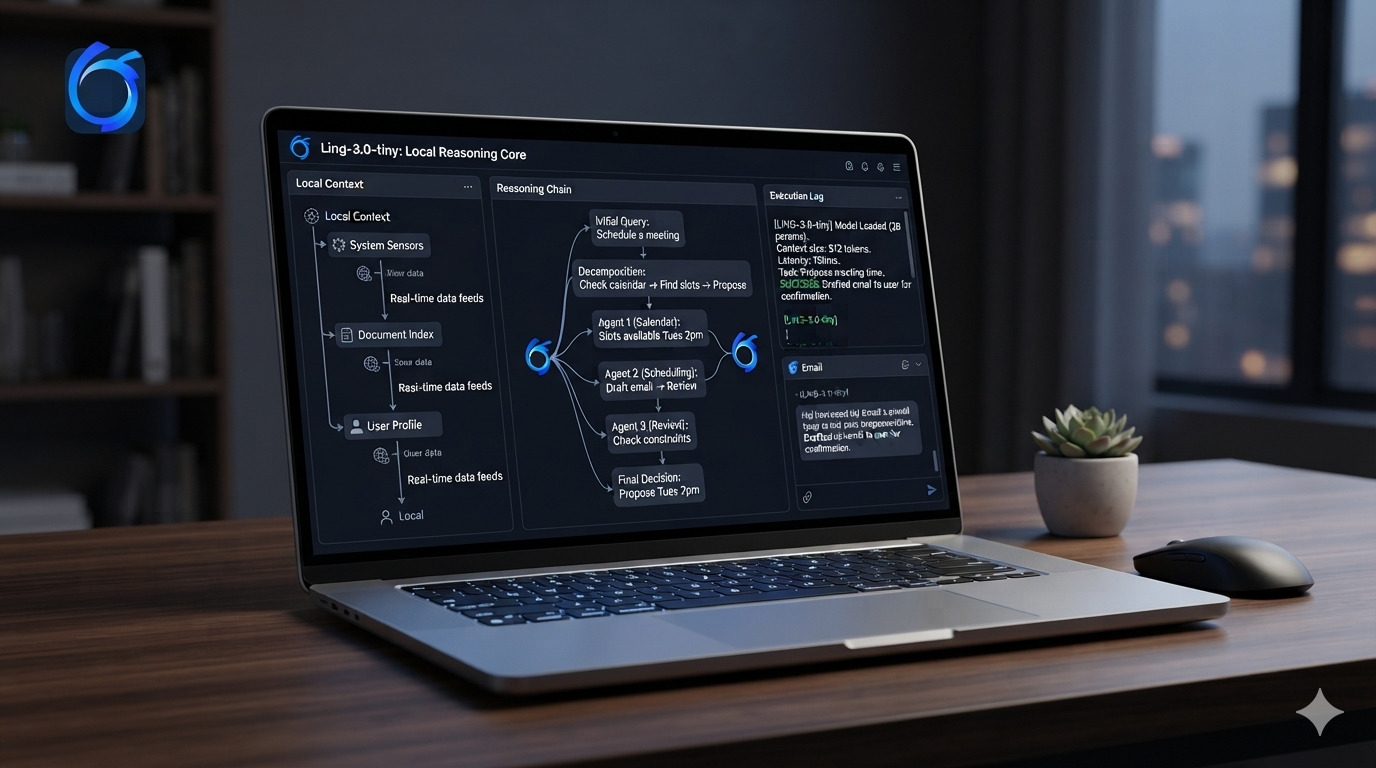
Ling-3.0-tiny: A 7.9B AI Model With Just 1.3B Active Parameters for Fast Local Reasoning
InclusionAI’s Ling-3.0-tiny is a lightweight hybrid reasoning MoE model with 7.9B total parameters and only 1.3B activated per token. Built for coding, reasoning, agentic workflows, and local deployment, it can reach around 86–90 tokens per second on an M4 Pro MacBook while using roughly 8.34 GiB of peak memory at an 8K context length.

Meta Muse Glimmer 30B: The New King of Local AI Agents
Meta's new 30-billion parameter multimodal model brings agentic reasoning, native tool calling, and speculative decoding to consumer hardware. Here is everything you need to know.
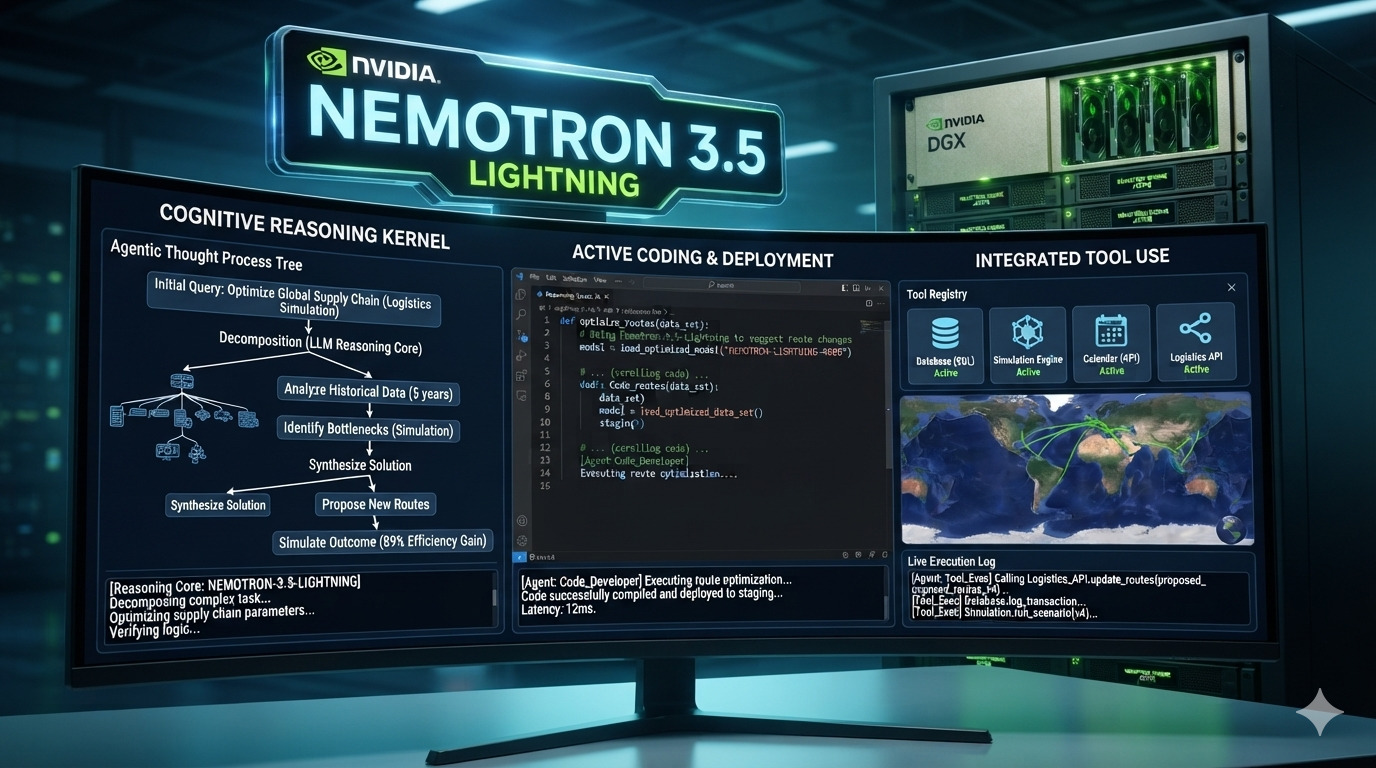
NVIDIA Nemotron 3.5 Lightning 30B: A 3B-Active Model Built for Long-Running AI Agents
NVIDIA’s Nemotron 3.5 Lightning 30B-A3B-NVFP4 combines a 30-billion-parameter hybrid Mixture-of-Experts architecture with only 3 billion active parameters, a 1M-token context window, NVFP4 quantization, and speculative decoding designed for fast agentic workloads, coding, reasoning, RAG, and long-running AI systems.