Meta Muse Glimmer 30B: The New King of Local AI Agents
Meta's new 30-billion parameter multimodal model brings agentic reasoning, native tool calling, and speculative decoding to consumer hardware. Here is everything you need to know.

Meta just shifted the landscape of open-weight models with the release of Muse Glimmer 30B. Instead of just pushing another chat model, Meta has engineered a complete ecosystem geared deliberately toward always-on, local AI agents that can run on consumer hardware.
We spun it up locally to see if it lives up to the hype. Here is everything you need to know about this 30-billion-parameter powerhouse and why it might be the only model your local agent needs.
What makes Muse Glimmer 30B different?
Unlike standard general-purpose LLMs, Muse Glimmer was distilled from Meta’s larger Muse Spark specifically for autonomous, multi-step tasks.
- Native Tool Calling: Glimmer abandons standard JSON for XML-style ATEM tool calls and emits channel-scoped reasoning, making it incredibly reliable for function execution.
- True Multimodality: It features a dedicated ~1.8B parameter ViT-G/14 perception encoder. It doesn’t just read text; it understands images natively, accepting up to 4,096 visual tokens per image.
- DFlash Speculative Decoding: Meta shipped a “drafter head” companion model alongside the main weights, drastically speeding up local generation times.
- Massive Context: It boasts a 128K context window, essential for long coding tasks and complex agentic failure recovery.
Hardware requirements: Can you run it?
Meta explicitly designed Glimmer to be accessible. While the full unquantized BF16 weights require serious VRAM, the highly optimized 4-bit GGUF variants are the real stars of the show.
If you have a 24GB GPU (like an RTX 3090/4090) or a Mac with 24GB+ of unified memory, you can comfortably run the K-Quant-17GB variant. Frameworks like llama.cpp, Ollama, vLLM, and MLX rolled out day-one support. AMD also offers native optimizations for Ryzen AI Max+ agentic PCs and Radeon PRO GPUs.
The local agent workflow
Because Glimmer was built for agentic tasks — coding, failure recovery, and tool use — it fundamentally changes the local developer experience. Meta’s release outperforms competitors like Qwen 3.6 in several benchmarks and provides native hooks for workflows.
Here is how easily you can get it running with Ollama:
# Pull and run the model via Ollama
ollama run muse-glimmer

# Launch an agent interface natively
ollama launch opencode --model muse-glimmer
The Verdict
Muse Glimmer 30B isn’t just a model; it’s a statement of intent from Meta. By providing the full BF16 weights, GGUF quantizations, and a dedicated DFlash speculative assistant under an Apache 2.0 license, they have handed developers a complete toolkit for building reliable, private, and capable AI agents.
If you are building AI agents in 2026, Muse Glimmer just became the default open-weight baseline.
Ready to try it?
We may earn a commission — at no extra cost to you. Supports our independent testing.
Visit official site →Related articles
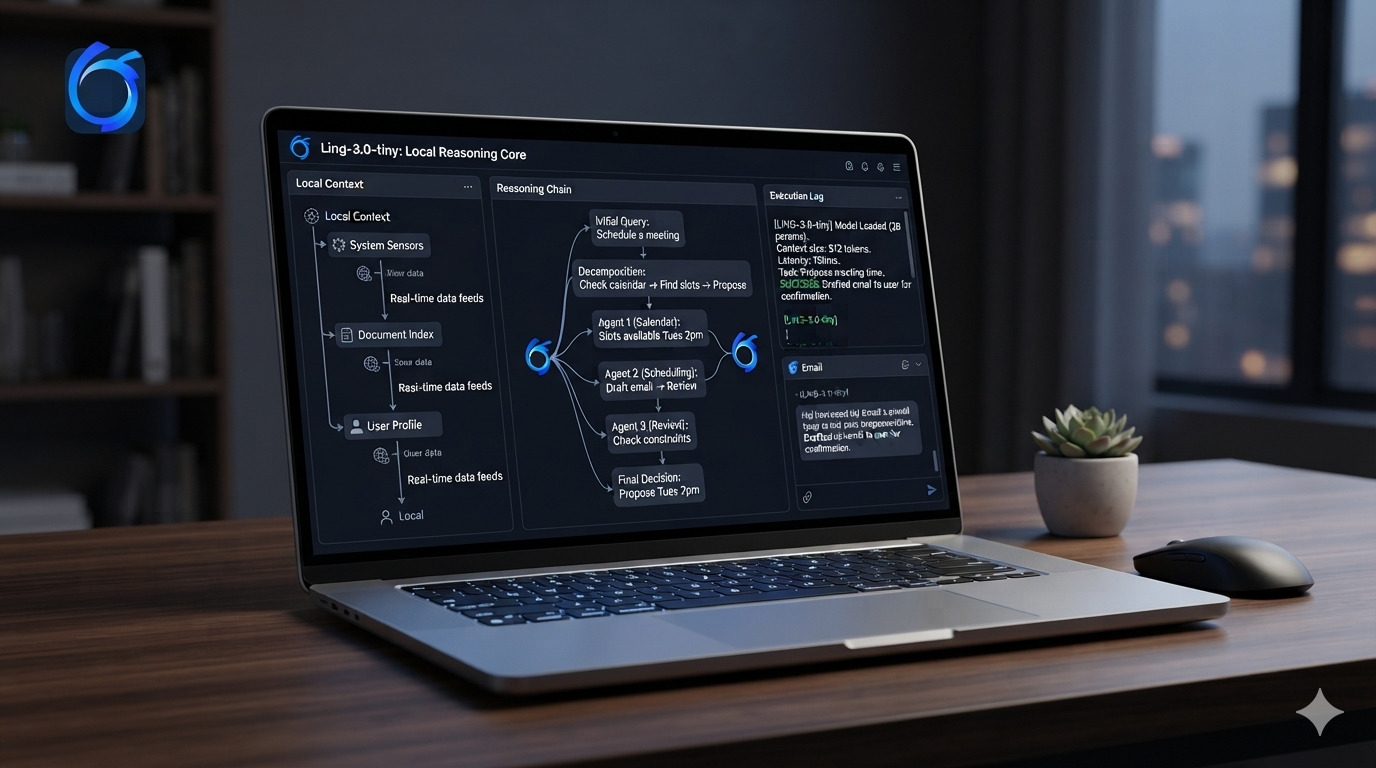
Ling-3.0-tiny: A 7.9B AI Model With Just 1.3B Active Parameters for Fast Local Reasoning
InclusionAI’s Ling-3.0-tiny is a lightweight hybrid reasoning MoE model with 7.9B total parameters and only 1.3B activated per token. Built for coding, reasoning, agentic workflows, and local deployment, it can reach around 86–90 tokens per second on an M4 Pro MacBook while using roughly 8.34 GiB of peak memory at an 8K context length.
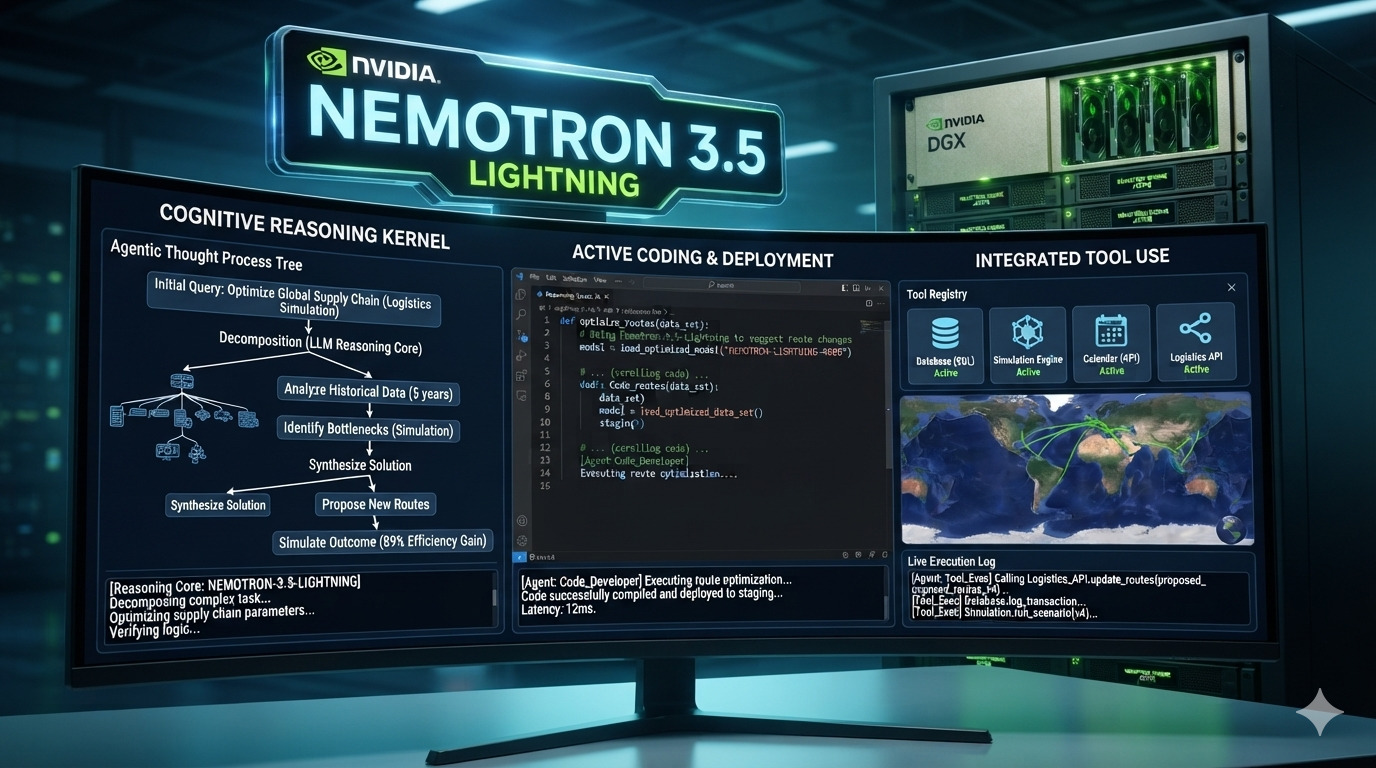
NVIDIA Nemotron 3.5 Lightning 30B: A 3B-Active Model Built for Long-Running AI Agents
NVIDIA’s Nemotron 3.5 Lightning 30B-A3B-NVFP4 combines a 30-billion-parameter hybrid Mixture-of-Experts architecture with only 3 billion active parameters, a 1M-token context window, NVFP4 quantization, and speculative decoding designed for fast agentic workloads, coding, reasoning, RAG, and long-running AI systems.
Kimi K3: The Open-Weight AI Agent With 2.8 Trillion Parameters and a Million-Token Context
Moonshot AI’s Kimi K3 is an open-weight multimodal agentic model with 2.8 trillion total parameters, 104 billion activated parameters, native vision, and a 1-million-token context window. Its combination of long-horizon coding, tool use, multimodal reasoning, and open weights makes it one of the most ambitious AI releases of 2026.