MiniMax H3 Is Bringing Native Audio to Open Video Generation
MiniMax H3 is a 33B-parameter omni-modal video model that understands text, images, video, and audio together while generating synchronized stereo video up to 2K resolution and 15 seconds long.
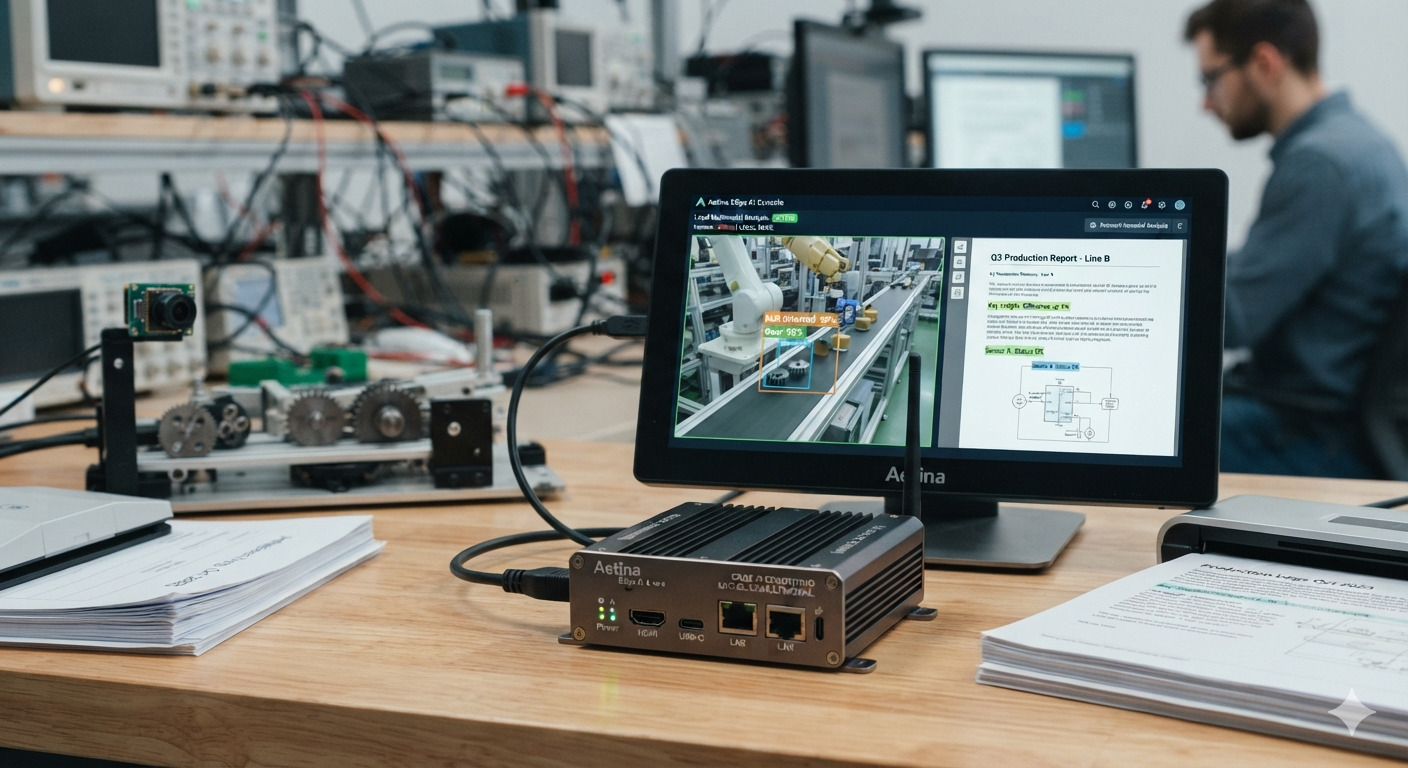
For years, AI video generation has been split into separate problems. One model generates video, another handles images, another works with audio, and the developer is left building the glue between them.
MiniMax H3 takes a very different approach.
Released by MiniMax on July 31, 2026, H3 is designed as a general-purpose omni-modal generation system that can understand text, images, video, and audio together — then generate synchronized video and stereo audio from that combined context. It supports clips from 4 to 15 seconds, up to 2K resolution through its regeneration workflow, and 24 FPS output.
One Model, Multiple Modalities
The most interesting part of H3 isn’t simply that it generates video. It is that the model treats different media as parts of the same context.
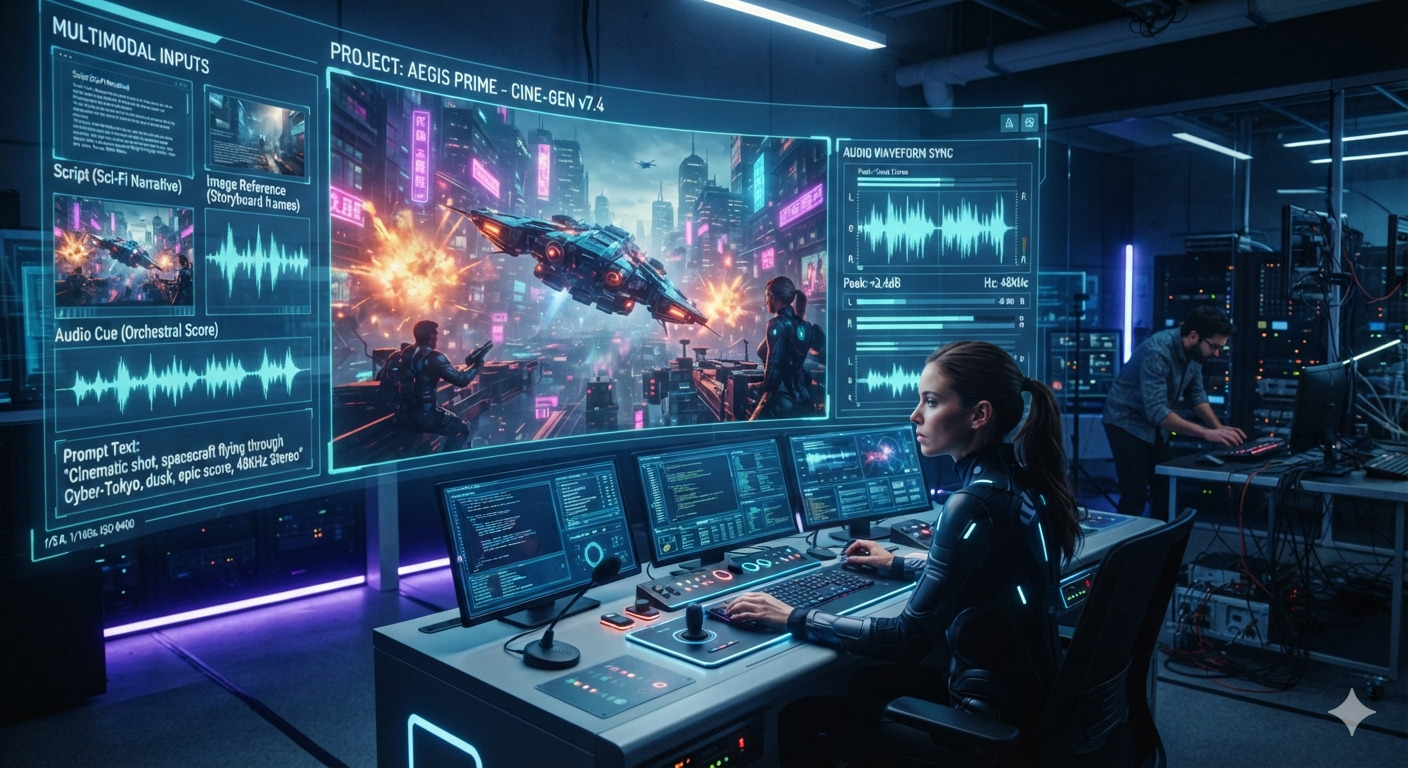
You can provide text instructions alongside images, video references, and audio. The H3-Base Ref2VA variant supports up to 9 images, 3 video clips, and 3 audio clips, with a maximum of 12 files across the combined input.
That opens up workflows that previously required several separate AI systems.
Imagine giving the model a character image, a reference video containing a camera movement, and an audio recording containing a voice or musical reference. Instead of separately generating the visual sequence and trying to synchronize the soundtrack afterward, H3 is designed to reason over those relationships as part of the generation process.
This is much closer to how creative production actually works.
Native Stereo Audio Changes the Game
Most AI video tools still treat sound as something that comes after the visual generation stage.
MiniMax H3 generates video and audio together. Its output includes 32 kHz stereo audio, and MiniMax describes the system as jointly predicting video and audio latents before decoding them into the final media.
That means sound effects, dialogue, environmental audio, and music can become part of the generation problem rather than an editing problem.
A cinematic scene could contain a camera movement, dialogue, environmental ambience, and a synchronized impact sound in a single generation pipeline.
For creators, that can remove a surprisingly large amount of post-production work.
The 2K Workflow Is More Interesting Than a Simple Upscaler
H3 doesn’t simply generate a low-resolution video and pass it through a conventional super-resolution model.
Its architecture uses an H3-Regenerate-2K stage that takes the lower-resolution result together with the original multimodal context and regenerates the output at higher resolution. MiniMax says this allows the system to reuse the original context when reconstructing fine details such as small text and other visual elements.
The standard H3-Base pipeline produces output with a default shorter side of 768 pixels, while the regeneration stage enables 2K generation.
That distinction matters.
Traditional upscaling primarily asks, “How can I make these pixels sharper?”
Context-aware regeneration asks, “What should these pixels actually contain?”
A 33B Transformer Under the Hood
H3 is not a lightweight video model.
The H3-Omni-Transformer is a 33-billion-parameter dense single-stream Transformer. MiniMax says approximately 13 billion parameters are associated with AdaLN-related branches, which can be precomputed and cached for inference-only deployment.
The architecture is designed to keep the core Transformer relatively unified rather than creating completely separate model structures for every modality.
Text, visual information, and audio are encoded into a unified multimodal sequence. The Transformer then jointly predicts the video and audio latent representations.
An especially interesting component is its H3-Encoder, which uses the full pretrained weights of Qwen-VL and provides hidden states from its 50th layer to the H3-Omni-Transformer.
So underneath the video generator is already a powerful multimodal language-and-vision foundation.
Two Ways to Generate
H3 provides two main task-specific checkpoints.
The FL2VA variant handles text-to-audio-video generation and first/last-frame-to-audio-video generation. Give it no image and it operates as text-to-video-with-audio; provide one or two frames and those frames can define the beginning, ending, or both states of the sequence.
The Ref2VA variant goes much further.
It accepts multimodal references consisting of images, videos, audio, or combinations of them. That makes it particularly interesting for consistent characters, visual style transfer, product advertising, music-driven sequences, and other workflows where the generation needs to respect multiple sources of information.
The Architecture Is Open, But the Entire Pipeline Isn’t
There is an important distinction developers should understand before calling H3 completely open-source.
MiniMax has released the H3-Base model checkpoints, including the required processor, tokenizer, text encoder, Visual VAE, Audio VAE, and Transformer components. The company also provides deployment instructions for SGLang, vLLM, Diffusers, and ComfyUI.
However, H3-Context-IR is a hosted preprocessing and orchestration system and is not included in the open-source release. H3-Regenerate-2K is also not currently open-sourced. MiniMax instead provides APIs for these parts of the official workflow.
So the more accurate description is that H3 has an open released base-generation stack, while some of the components responsible for the full official 2K workflow remain hosted.
That distinction is important for anyone planning a completely offline deployment.
Designed for Serious Hardware
H3 is also not a model you casually run on a typical laptop GPU.
MiniMax’s own example for SGLang deployment uses four GPUs with tensor/sequence parallel configuration for both the FL2VA and Ref2VA variants. The released checkpoints use BF16 precision.
That makes H3 much more interesting for GPU servers, research labs, creators with multi-GPU workstations, and developers building production video-generation infrastructure than for ordinary consumer hardware.
The tradeoff is capability.
You are getting a 33B multimodal Transformer designed to process complex combinations of media and generate synchronized video and audio.
Where H3 Could Matter Most
The obvious use case is cinematic video generation, but the bigger opportunity may be commercial content.
MiniMax specifically highlights advertising, branding, e-commerce, product design, UI/UX, gaming, and other creative workflows for H3.
Consider an online store that needs ten product videos.
Instead of manually shooting every product, recording voiceovers, creating background music, editing the footage, and synchronizing everything, a multimodal model can potentially take product imagery, brand references, example footage, and a script and turn them into a complete short-form advertisement.
That is where models like H3 start looking less like “AI video generators” and more like automated production systems.
What Developers Should Try
The most interesting way to experiment with MiniMax H3 is not simply typing a cinematic prompt.
Feed the model relationships.
Give it a reference image for the subject, a reference video for the camera movement, audio for the sound design, and precise instructions describing how those elements should interact.
For local experimentation, MiniMax provides Hugging Face checkpoints and deployment paths through SGLang, vLLM, Diffusers, and ComfyUI.
For the complete 2K workflow, the official pipeline combines a locally deployed H3-Base service with MiniMax’s hosted Context-IR and Regenerate-2K APIs.
The Bigger Picture
MiniMax H3 represents an important shift in how video models are being designed.
The next generation of AI video systems won’t simply become better at predicting the next frame. They will increasingly understand video as one part of a larger multimodal environment containing language, images, sound, reference footage, characters, objects, and instructions.
H3 is an early example of that direction.
Its ability to jointly understand multimodal context and generate synchronized video and audio makes it considerably more than another text-to-video model. And by releasing the H3-Base checkpoints, MiniMax is giving developers a foundation they can actually experiment with and build around.
The future of generative video may not be about generating a picture that moves.
It may be about giving an AI an entire creative context — and letting it produce the scene, the camera, the motion, and the sound together.
Related articles
Anima-2.9B: A 2.9B-Parameter Image Model Built for Anime and Illustration
Gazingstars123’s Anima-2.9B expands the original Anima architecture to roughly 2.9 billion parameters, targeting anime, illustration, and non-photorealistic image generation with newer training data, stronger prompt understanding, and support for ComfyUI and Forge-Neo.
MiniMax Music 3: The Open-Weights Model Bringing 5-Minute AI Songs to Local Hardware
With a hybrid Qwen3-8B architecture, native ComfyUI support, and full song coherence up to 5 minutes, MiniMax’s new open-weights release challenges closed music generators like Suno and Udio.

Best AI Video Generators in 2026, Compared Side by Side
We generated 300 clips across Sora, Veo 3.1, Runway Gen-4, and Kling with identical prompts. The results split into clear camps — here is the best AI video generator for each use case.