Claude Fable 5: Anthropic Just Automated the Tech Lead
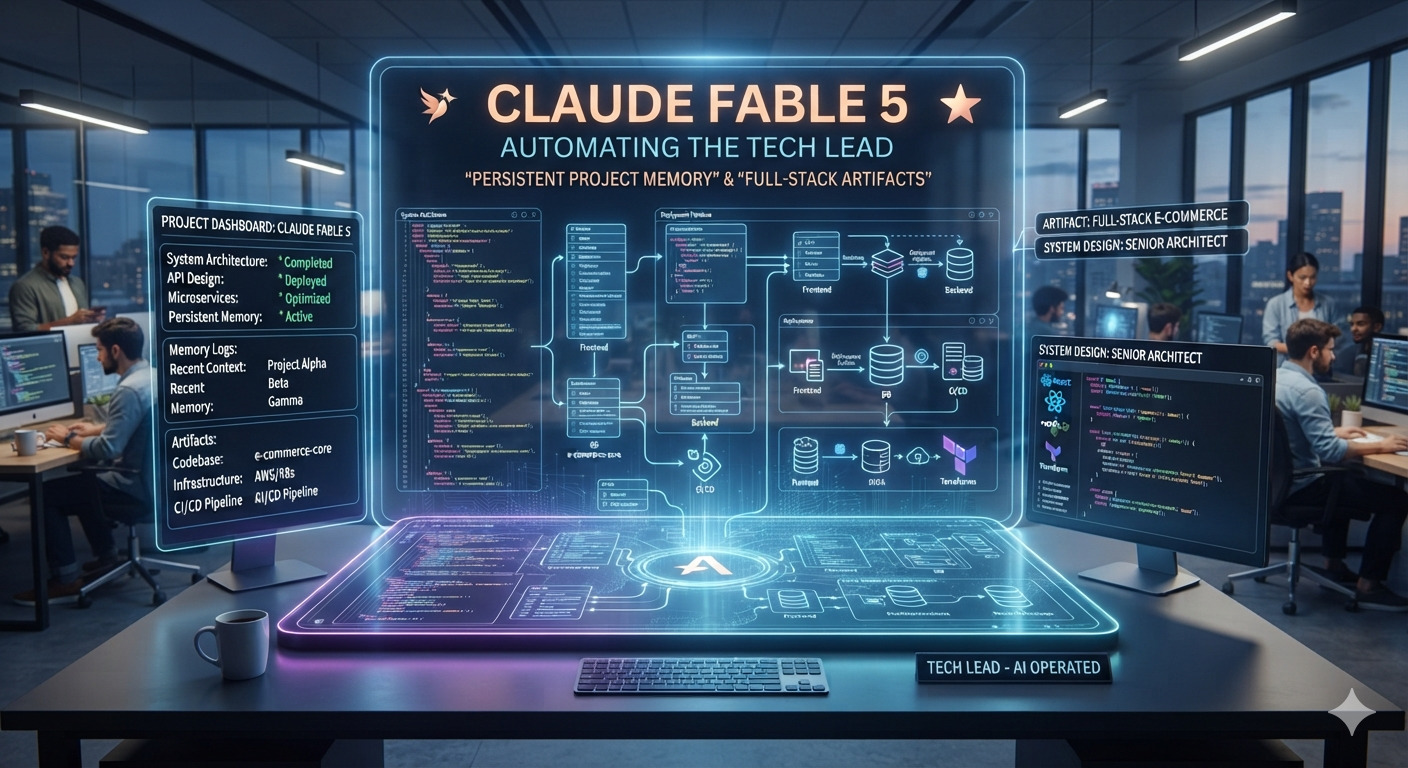
While the rest of the industry races to the bottom on inference costs, Anthropic’s Claude Fable 5 introduces 'Persistent Project Memory' and full-stack Artifacts, shifting the AI from a disposable junior coder to a senior architect.
If DeepSeek-V4-Pro represents the brute-force commoditization of AI reasoning, Anthropic’s Claude Fable 5, released late last night, is the exact opposite.
Anthropic didn’t try to win the race to zero margins. Instead, they looked at how enterprise engineering teams actually fail. Projects don’t usually fail because a developer can’t write a React component or reverse a binary tree; they fail because of misaligned requirements, architectural drift, and lost context between microservices.
With Fable 5, Claude is no longer competing for the job of a junior developer. It is gunning for the Tech Lead.
Persistent Project Memory
The most paradigm-shifting feature of Fable 5 isn’t its benchmark scores—it’s the death of the “stateless chat.”
For years, our workflows involved constantly re-hydrating models with context. We pasted in schemas, fed them Git diffs, and painstakingly explained the business logic from scratch every session. Fable 5 introduces Persistent Project Memory (PPM). By natively integrating with your version control and issue trackers via an enterprise IAM role, Claude now maintains an ongoing, vectorized understanding of your entire system architecture.
When you ask Fable 5 to “add Stripe billing to the user dashboard,” it doesn’t just spit out generic API boilerplate. It knows that team B migrated the database to PostgreSQL last month, it remembers that your authentication middleware expects JWTs in a specific format, and it automatically flags that this feature will conflict with an ongoing A/B test in another branch.
Full-Stack Artifacts
When Artifacts debuted back in 2024, they were neat UI tricks for rendering front-end components. Fable 5 turns the Artifact window into a fully orchestrated, ephemeral staging environment.
Because the model inherently understands containerization and infrastructure-as-code, asking it to prototype a full-stack feature now spawns a multi-container Sandbox right in the browser. It spins up a mocked Redis cache, a local database, and a frontend client, routing the ports internally. You aren’t just reviewing code anymore; you are interacting with a deployed, live prototype before a single file is committed to your repository.
The “Adult in the Room” Architecture
Where Fable 5 truly shines—and where it justifies its premium API pricing—is its alignment toward system stability.
If you ask a cheap, swarm-based model to build a messy feature, it will eagerly write 10,000 lines of spaghetti code to make it happen. Fable 5 is uniquely trained on what Anthropic calls “Architectural Taste.” It pushes back. If you ask it to introduce a circular dependency or build a tightly coupled monolith, it will explicitly warn you of the tech debt and propose a decoupled event-driven alternative. It is the first AI that routinely tells engineers, “You probably shouldn’t build it this way.”
What to do about it
As the ecosystem splits between cheap swarms (DeepSeek) and hyper-contextual architects (Claude), your engineering strategy needs to adapt:
- Stop treating Claude like a typewriter: If you are still using Claude to write single functions or regex strings, you are wasting money. Use local models for that. Use Fable 5 for system design, database schema migrations, and API contract drafting.
- Hook up the integrations: The magic of Fable 5 requires trust. Get your security team to approve the GitHub/GitLab integrations so Claude can build its persistent memory graph. The model is useless if it is kept in a vacuum.
- Elevate your prompt engineering to product management: The highest-leverage skill in a Fable 5 world isn’t technical prompting; it is writing crystal-clear business requirements. The model handles the “how.” You are now exclusively responsible for the “what” and the “why.”
The future of coding isn’t just generating text faster. It’s maintaining coherence across a massive codebase over years of development. Today, Anthropic proved they own that space.
Ready to try it?
We may earn a commission — at no extra cost to you. Supports our independent testing.
Visit official site →Related articles
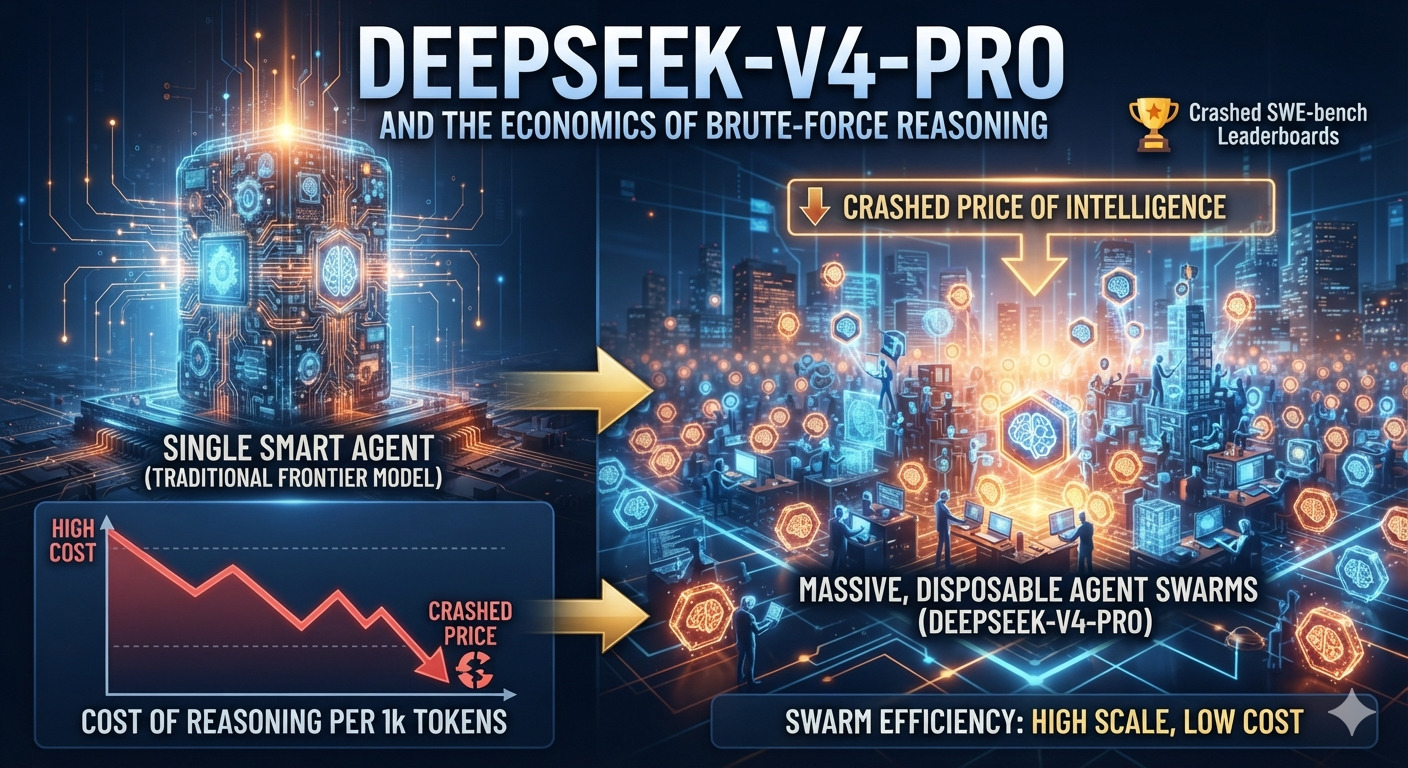
DeepSeek-V4-Pro and the Economics of Brute-Force Reasoning
DeepSeek's newest frontier model didn't just top the SWE-bench leaderboards—it crashed the price of intelligence. Why the era of the 'single smart agent' is giving way to massive, disposable agent swarms.

How AI Is Changing Software Development in 2026
Spec-driven development, agentic CI pipelines, and the quiet rewrite of the engineering career ladder — an analysis of how AI is actually changing the day-to-day of building software.

Best Free AI Tools in 2026: The Full No-Cost Stack
Every genuinely useful AI tool you can run today without entering a credit card — chat, search, images, code, audio, and automation — plus the free-tier limits that actually matter.